March 23
“Do not store up for yourselves treasures on earth, where moth and rust consume and where thieves break in and steal; but store up for yourselves treasures in heaven, where neither moth nor rust consumes and where thieves do not break in and steal. For where your treasure is, there your heart will be also.”
“The eye is the lamp of the body. So, if your eye is healthy, your whole body will be full of light; but if your eye is unhealthy, your whole body will be full of darkness. If then the light in you is darkness, how great is the darkness!”
“No one can serve two masters; for a slave will either hate the one and love the other, or be devoted to the one and despise the other. You cannot serve God and wealth.”
-Matthew 6:19-24
(Please read through the scripture three times using lectio divina.)
Reflection
I found that religion was full of benevolence; I found there was joy and peace in believing, and I felt as though I was commanded to come out from the world and be separate; to go forward and be baptized. Methought I heard a spiritual interrogation, are you able to drink of that cup that I have drank of? And to be baptized with the baptism that I have been baptized with? And my heart made this reply: Yea, Lord, I am able. Yet amid these bright hopes, I was filled with apprehensive fears, lest they were false. I found that sin still lurked within; it was hard for me to renounce all for Christ, when I saw my earthly prospects blasted. O, how bitter was that cup. Yet I drank it to its very dregs. It was hard for me to say, thy will be done; . . . I was at last made willing to be anything or nothing, for my Redeemer’s sake. Like many, I was anxious to retain the world in one hand, and religion in the other. “Ye cannot serve God and mammon,” sounded in my ear, and with giant-strength, I cut off my right hand, as it were, and plucked out my right eye, and cast them from me, thinking it better to enter life halt and maimed, rather than having two hands or eyes to be cast into hell. Thus ended these mighty conflicts, and I received this heart-cheering promise, “That neither death, nor life, nor principalities, nor powers, nor things present, nor things to come, should be able to separate me from the love of Christ Jesus our Lord.”
-from Maria W. Stewart (1803-1879), “What If I Am a Woman?” Preaching with Sacred Fire: An Anthology of African American Sermons, 1750 to the Present.

Action (Contemplate)
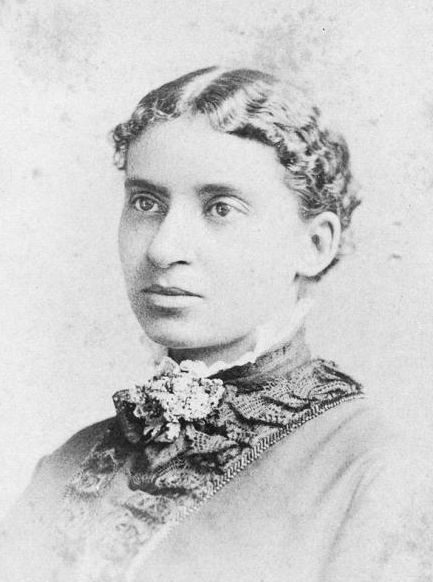
Orphaned at age three, Maria W. Stewart went on to become the first African-American woman to give public lectures and was the first African-American woman to speak for women’s rights and against slavery. Her lectures were so poorly received that, under pressure, she left her Boston home.
In 1826, she married an independent shipping agent, When he died three years later, the executors of his estate kept Maria from receiving any inheritance. Because of her passion to teach African-American children, she took a job teaching in Baltimore earning 50 cents a month even though other teachers earned $1. In spite of her poverty, when she moved to Washington DC in 1861, she established a school for the children of families who had escaped slavery.
Maria Stewart gave herself completely to God’s call on her life. What is your sense of God’s call on your life? Write it out in a sentence. What are the distractions that hinder your obedience to that call? In an anxious time, is it more tempting to be self-protective rather than to live into your calling?